


Coronavirus is changing the world in unprecedented ways. Subscribe here for a daily briefing on how this global crisis is affecting cities, technology, approaches to climate change, and the lives of vulnerable people.
By Elena Berton and Sophie Davies
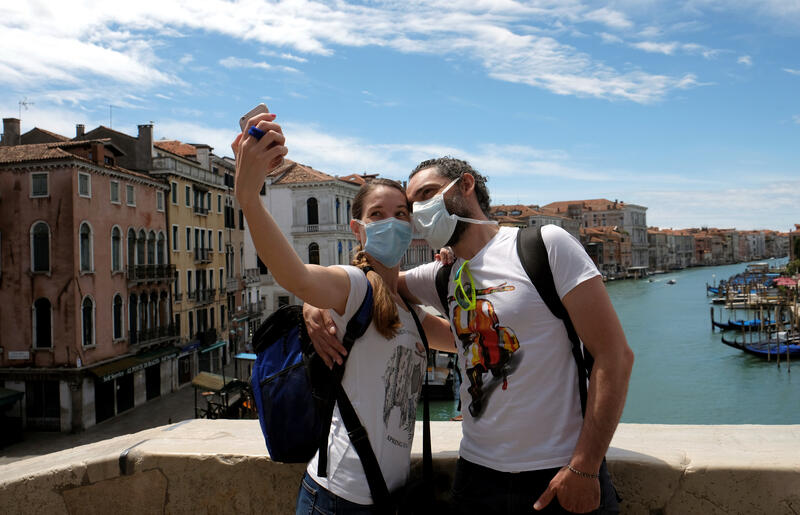
PARIS/BARCELONA, June 11 (Thomson Reuters Foundation) – From Venice to Barcelona, Europe’s top tourist destinations are bracing for their worst ever summer as they emerge from lockdown, but many residents are delighted to have a break from the hordes of visitors that now blight their home cities.
“We need to put the people who live in Venice first,” said Marco Gasparinetti, spokesman of Gruppo 25 Aprile, an organisation urging a radical rethink on tourism in the Italian lagoon city.
He and others see the crisis as a chance to tackle “overtourism”, which they say has wreaked environmental havoc and ruined neighbourhoods as landlords turn rental properties into holiday lets, pricing out residents.
“We cannot go back to the previous system as if nothing had happened, destroying the city with mass tourism,” he told the Thomson Reuters Foundation.
Coronavirus: our latest stories
A booming global middle class and proliferation of budget airlines has seen some of Europe’s most stunning cities – including Amsterdam, Bruges and Dubrovnik – become overrun with tourists.
In some places the problem has been exacerbated by the massive increase in the number and size of cruiseships.
With cruises suspended, Venetians say the lagoon is looking cleaner than it has for decades. Cormorants and crabs were even spotted in St Mark’s Square during lockdown.
In Barcelona, Iria Mon said the break in tourism means she can finally enjoy trips with her children to attractions like Park Guell.
Designed by Barcelona’s celebrated architect Antoni Gaudi, the park has become so rammed with visitors in recent years that Mon said many locals were put off using it.
“Barcelona is one of those cities whose success is also its downfall,” she said.
Having recently returned to the city after a decade abroad, Mon was dismayed to find even her own modest neighbourhood swamped with sightseers, where once children played in the streets.
On the city outskirts, La Teixonera used to be a quiet area, but the opening of the Bunkers del Carmel – a hilltop ruin with a view over the city – has changed that.
“Now it’s sometimes a mission to even get on a bus because they’re so full,” Mon said.