

By Christine Murray
MEXICO CITY, Dec 28 (Thomson Reuters Foundation) – Hit by unusually low rainfall this year, Mexico City is working urgently to overcome water shortages, with climate change expected to add to existing problems of an over-exploited aquifer and old, leaky pipes, officials said.
The Mexican capital, situated in a high-altitude valley, relies mostly on water pumped from its underground aquifer and reservoirs dozens of kilometers away to meet water demand in its wider metropolitan area, home to more than 20 million people.
Reservoirs in the Cutzamala system provide one-quarter of the greater city’s requirements, but by November after sparse rain, they were almost 18 percentage points below normal levels.
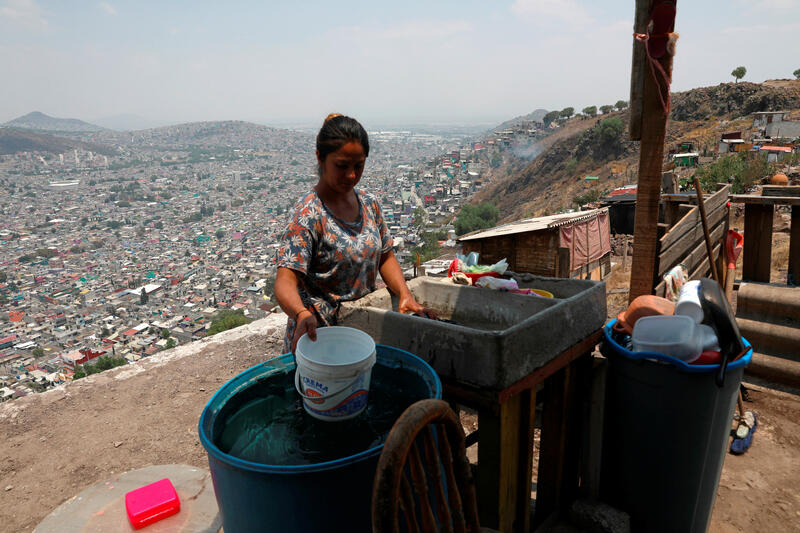
As levels dropped, authorities reduced flow from the reservoirs in the second half of 2020, disrupting tap water supplies and leaving some residents reliant on trucks and cisterns to meet their needs.
While it is hard to prove any single dry spell is caused by climate change, Rafael Carmona Paredes, director of the Water System of Mexico City (SACMEX), said broadly it was already having an effect.
“Climate change has definitely changed rainfall patterns,” he told the Thomson Reuters Foundation. “We have to prepare ourselves in lots of ways to be able to cope with these variations in climate conditions.”
Researchers have estimated natural water availability for the city could fall by 10-17% by 2050 as temperatures rise.
In response to this year’s low rainfall, authorities cut Cutzamala’s flow to the city by 10%, affecting 300,000 people in the mountainous southwest who normally have regular access.
Millions of others already suffer from intermittent supply.