

* App gets forecasts from virtual weather stations
* Information can save herders scouting as far as 120 km
* Illiteracy and low smartphone access limit app’s reach
By Kagondu Njagi
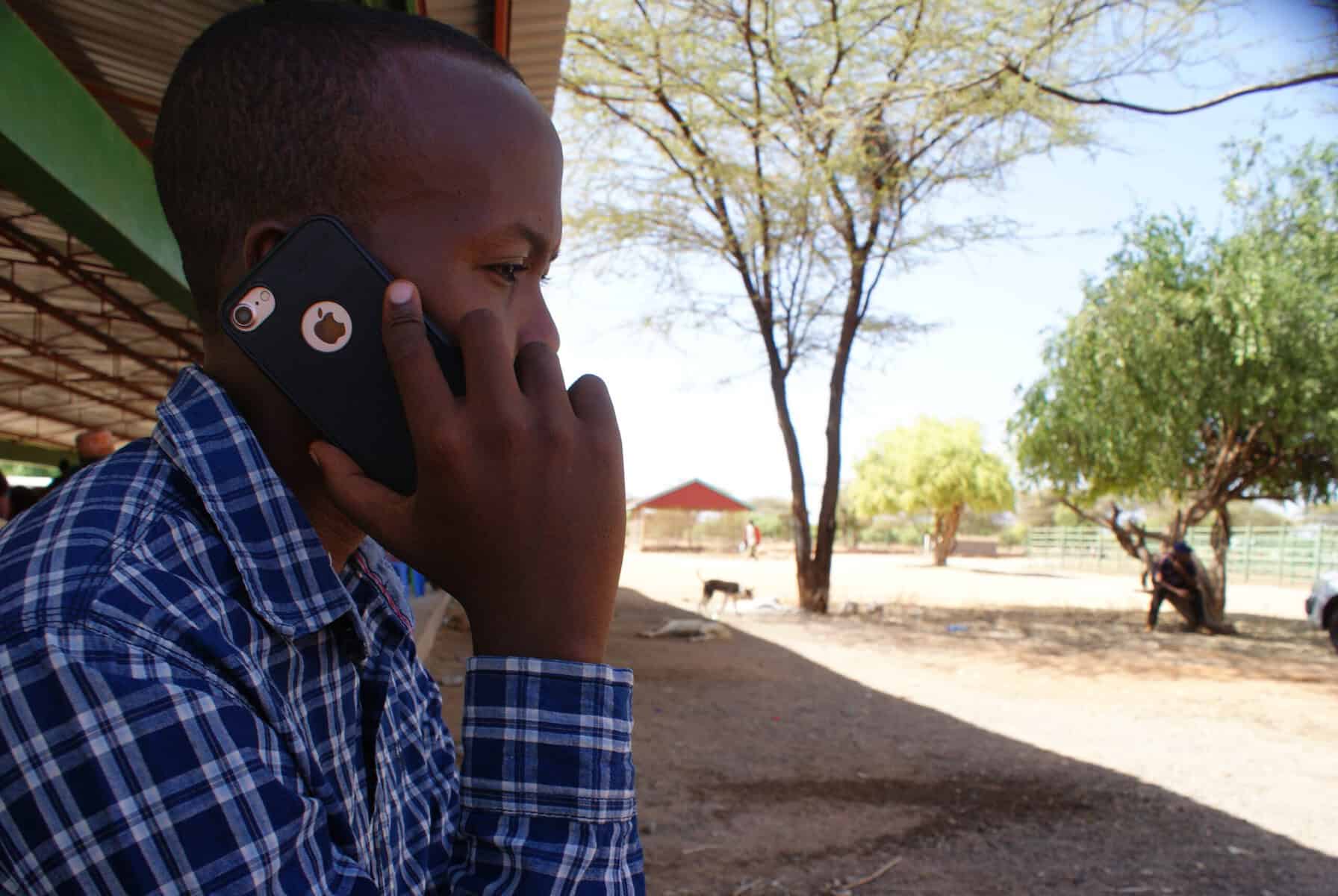
MERILLE, Kenya, Feb 16 (Thomson Reuters Foundation) – Sitting under a low tree to escape the blazing Kenyan sun, Kaltuma Milkalkona and two young men hunch intently over the older woman’s smartphone – but they are not transfixed by the latest sports scores or a trending internet meme.
The men instead are looking at a weather alert for their village in the country’s north, sent through an app that uses weather station data to help pastoralists prepare for drought.
The myAnga app on Milkalkona’s phone showed that Merille would continue facing dry weather and that “pasture conditions (were) expected to be very poor with no grass and browse availability.”
One of the young men said he would warn his older brother, who had taken the family’s livestock to another area where there was water and pasture, not to come home yet.
Milkalkona, 42, who lives and sells clothing in the neighbouring town of Laisamis, said she often shared data from her phone with others who did not have smartphones.
“When I get the weather alerts, I usually show the people who are close to me,” she said, as well as calling others in more distant villages.
Extreme and erratic weather linked to a warming climate can be devastating for Kenya’s pastoralists, with prolonged droughts making it difficult to find enough pasture for their animals.
But armed with up-to-date weather information and advice, herders can plan ahead to ensure their livestock make it through the region’s frequent dry spells, said Frankline Agolla, co-founder of Amfratech, a Nairobi-based social enterprise that developed the myAnga app.
The app – its name means “my weather” – goes further than the weather reports anyone can get from the meteorological department by interpreting them and making recommendations to herders on the best way to protect their livelihoods.
“If there is an imminent drought, we advise them to sell their livestock early to reduce their losses,” said Agolla in an interview with the Thomson Reuters Foundation.
“If a rainy season is coming, we tell them to ensure they do not cross rivers that are flooded and also to vaccinate their animals because diseases like Rift Valley Fever might be coming,” he said.