
SEARCH
-
article
FACTBOX - Ebola: Profile of a killer
Health workers are often infected with Ebola while caring for patients. Bodies can remain contagious for up to 60 days.
-
article
Liberian health authorities confirm two cases of Ebola -WHO
Ebola has killed more than 1,500 people since it was first recorded in 1976 in what is now Democratic Republic of Congo, but this is the first fatal outbreak in West Africa
-
photo
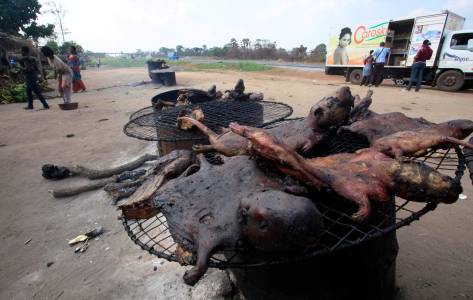
People walk near dried bushmeat near a road of the Yamoussoukro highway
People walk near dried bushmeat near a road of the Yamoussoukro highway March 29, 2014. Bushmeat - from bats to antelopes, squirrels, porcupines and monkeys - has long held pride of place on family menus in West and Central Africa, whether stewed, smoked or roasted. Experts who have studied the Ebola virus from its discovery in 1976 in Democratic Republic of Congo, then Zaire, say its suspected origin - what they call the reservoir host - is forest bats. Links have also been made to the carcasses of freshly slaughtered animals consumed as bushmeat. REUTERS/Thierry Gouegnon (IVORY COAST - Tags: FOOD HEALTH)
-
photo
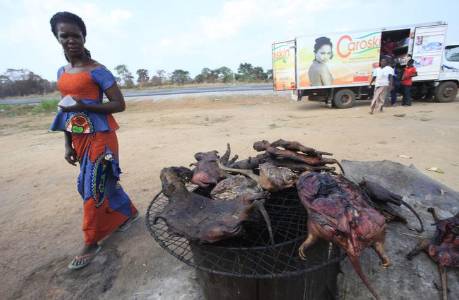
A woman walks past dried bushmeat near a road of the Yamoussoukro highway
A woman walks past dried bushmeat near a road of the Yamoussoukro highway March 29, 2014. Bushmeat - from bats to antelopes, squirrels, porcupines and monkeys - has long held pride of place on family menus in West and Central Africa, whether stewed, smoked or roasted. Experts who have studied the Ebola virus from its discovery in 1976 in Democratic Republic of Congo, then Zaire, say its suspected origin - what they call the reservoir host - is forest bats. Links have also been made to the carcasses of freshly slaughtered animals consumed as bushmeat. REUTERS/Thierry Gouegnon (IVORY COAST - Tags: FOOD HEALTH)
-
photo
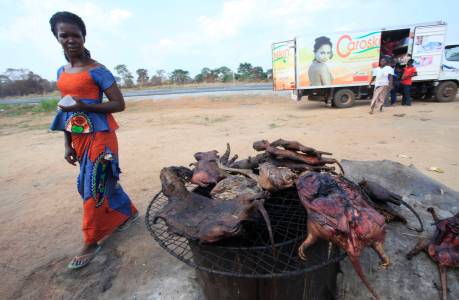
A woman dries bushmeat near a road of the Yamoussoukro highway
A woman dries bushmeat near a road of the Yamoussoukro highway March 29, 2014. Bushmeat - from bats to antelopes, squirrels, porcupines and monkeys - has long held pride of place on family menus in West and Central Africa, whether stewed, smoked or roasted. Experts who have studied the Ebola virus from its discovery in 1976 in Democratic Republic of Congo, then Zaire, say its suspected origin - what they call the reservoir host - is forest bats. Links have also been made to the carcasses of freshly slaughtered animals consumed as bushmeat. REUTERS/Thierry Gouegnon (IVORY COAST - Tags: FOOD HEALTH)
-
photo
A woman dries bushmeat near a road of the Yamoussoukro highway
A woman dries bushmeat near a road of the Yamoussoukro highway March 29, 2014. Bushmeat - from bats to antelopes, squirrels, porcupines and monkeys - has long held pride of place on family menus in West and Central Africa, whether stewed, smoked or roasted. Experts who have studied the Ebola virus from its discovery in 1976 in Democratic Republic of Congo, then Zaire, say its suspected origin - what they call the reservoir host - is forest bats. Links have also been made to the carcasses of freshly slaughtered animals consumed as bushmeat. REUTERS/Thierry Gouegnon (IVORY COAST - Tags: FOOD HEALTH)
-
photo
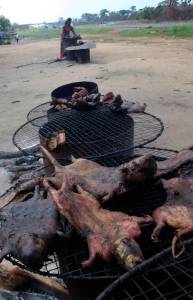
Dried bushmeat is displayed near a road of the Yamoussoukro highway
Dried bushmeat is displayed near a road of the Yamoussoukro highway March 29, 2014. Bushmeat - from bats to antelopes, squirrels, porcupines and monkeys - has long held pride of place on family menus in West and Central Africa, whether stewed, smoked or roasted. Experts who have studied the Ebola virus from its discovery in 1976 in Democratic Republic of Congo, then Zaire, say its suspected origin - what they call the reservoir host - is forest bats. Links have also been made to the carcasses of freshly slaughtered animals consumed as bushmeat. REUTERS/Thierry Gouegnon (IVORY COAST - Tags: FOOD HEALTH)
Copyright © 2020 Thomson Reuters Foundation. Thomson Reuters Foundation is a charity registered in England and Wales (registration number: 1082139)
