

By Thin Lei Win
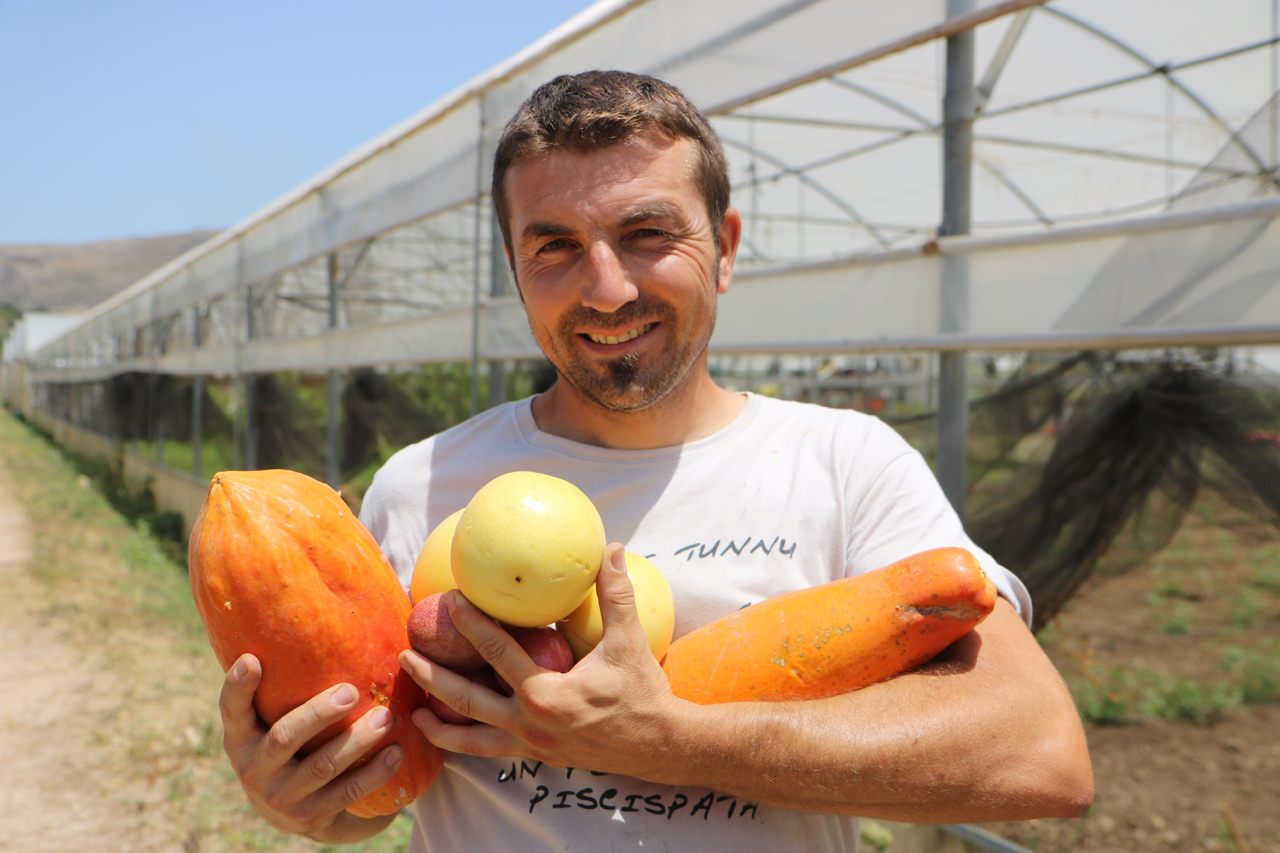
TERRASINI, Italy, Aug 8 (Thomson Reuters Foundation) – When Sicilian farmer Rosolini Palazzolo first started growing papayas 11 years ago, hardly any of his neighbours even knew what they were.
Now, the southern Italian island famed for its picturesque orange and lemon groves is dotted with the kind of exotic fruit trees more usually associated with tropical climates – from papaya to bananas to mangoes.
“I get shivers when I eat mangoes now,” Palazzolo laughed as he recalled how unimpressed he was when he first tasted the fruit after buying one imported from Brazil.
The 39-year-old is part of a new generation of Sicilian farmers producing exotic fruits – encouraged by demand and made possible by climate change.
“The temperature rise has been good for us … for these fruits,” he said as he cut open a passion fruit.
Demand has also grown as consumers have become more aware of the health benefits of eating fresh, locally grown papayas and other tropical fare, Palazzolo added.
“They got the information from the internet about vitamins and so on, and they started buying. This was the process.”