

* Highways built in 1950s, 1960s often cut through minority communities
* Highways can bring health risks and depress local economies
* Removals have spiked across the country in last five years
By Carey L. Biron
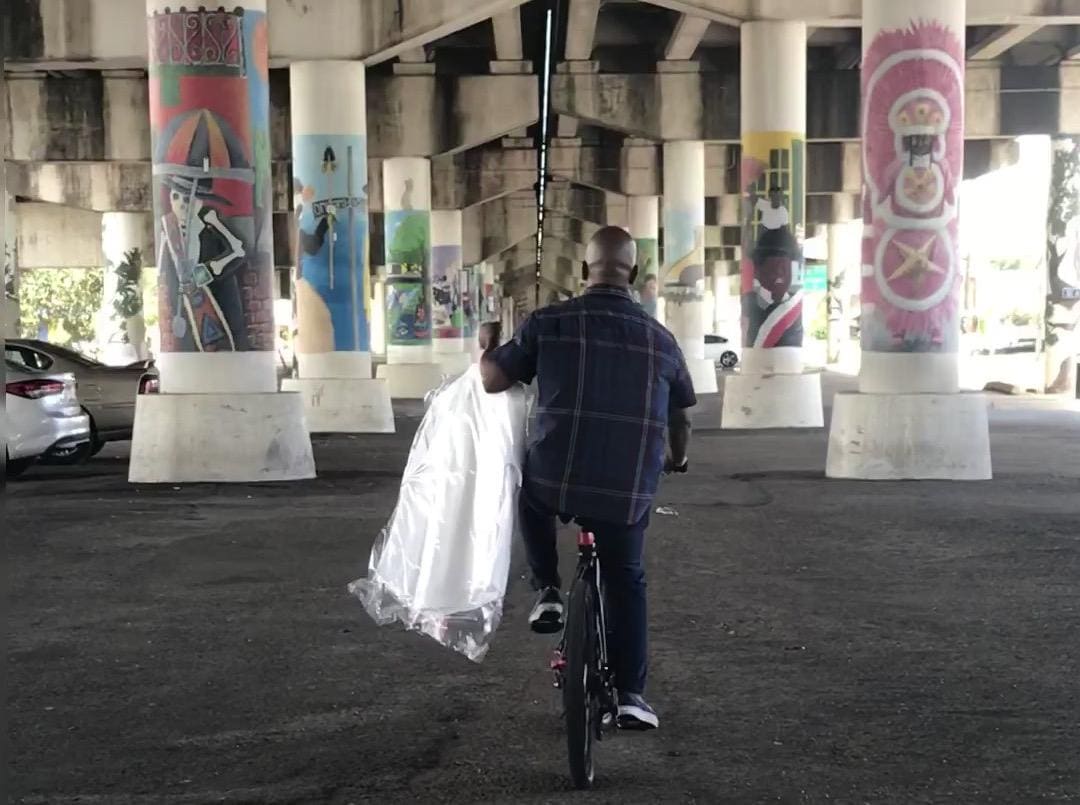
WASHINGTON, April 12 (Thomson Reuters Foundation) – Through the years that she has been fighting against it, Amy Stelly’s opponent has remained unmoved, looming nearby and covering her New Orleans home with filth: an elevated highway, towering above her once-thriving neighborhood.
Since its construction in the 1960s, the section of Interstate 10 running above Claiborne Avenue has decimated what used to be the center of the city’s Black community, said Stelly, including businesses and greenery.
Once a bustling retail corridor shaded by mature oak trees, the street satisfied all of the community’s needs, the designer and urban planner told the Thomson Reuters Foundation. “Doctors, dentists, groceries. It was the place to be.”
“Over time, the neighborhood became disinvested and businesses closed,” said Stelly, who has been called a “freeway fighter” for her decade-long struggle to get the city to remove the elevated interstate entirely and reroute traffic.
Now her battle is getting a boost from President Joe Biden’s new infrastructure package, which brings high-level attention to the effects of urban highways.
The announcement of the plan in March referenced the need to redress historical infrastructure inequities, specifically calling out how “past transportation investments divided communities – like the Claiborne Expressway in New Orleans”.
Biden’s new transportation secretary, former South Bend mayor Pete Buttigieg, noted in December that highway projects have had a disproportionate impact on minority communities, pledging to “make righting these wrongs an imperative”.
Earlier that month, members of Congress had proposed $10 billion to facilitate highway removals or redesigns as part of a broader economic justice bill.
“There’s never been explicit presidential support for something like this,” said Ben Crowther, program manager at the Congress for the New Urbanism (CNU), a Washington, D.C.-based nonprofit that tracks highway removals.
If funding was made available “exclusively for removing highways and righting the historical wrongs they’ve perpetuated,” he said, “that would tip the scales in favor of a lot more removal projects.”